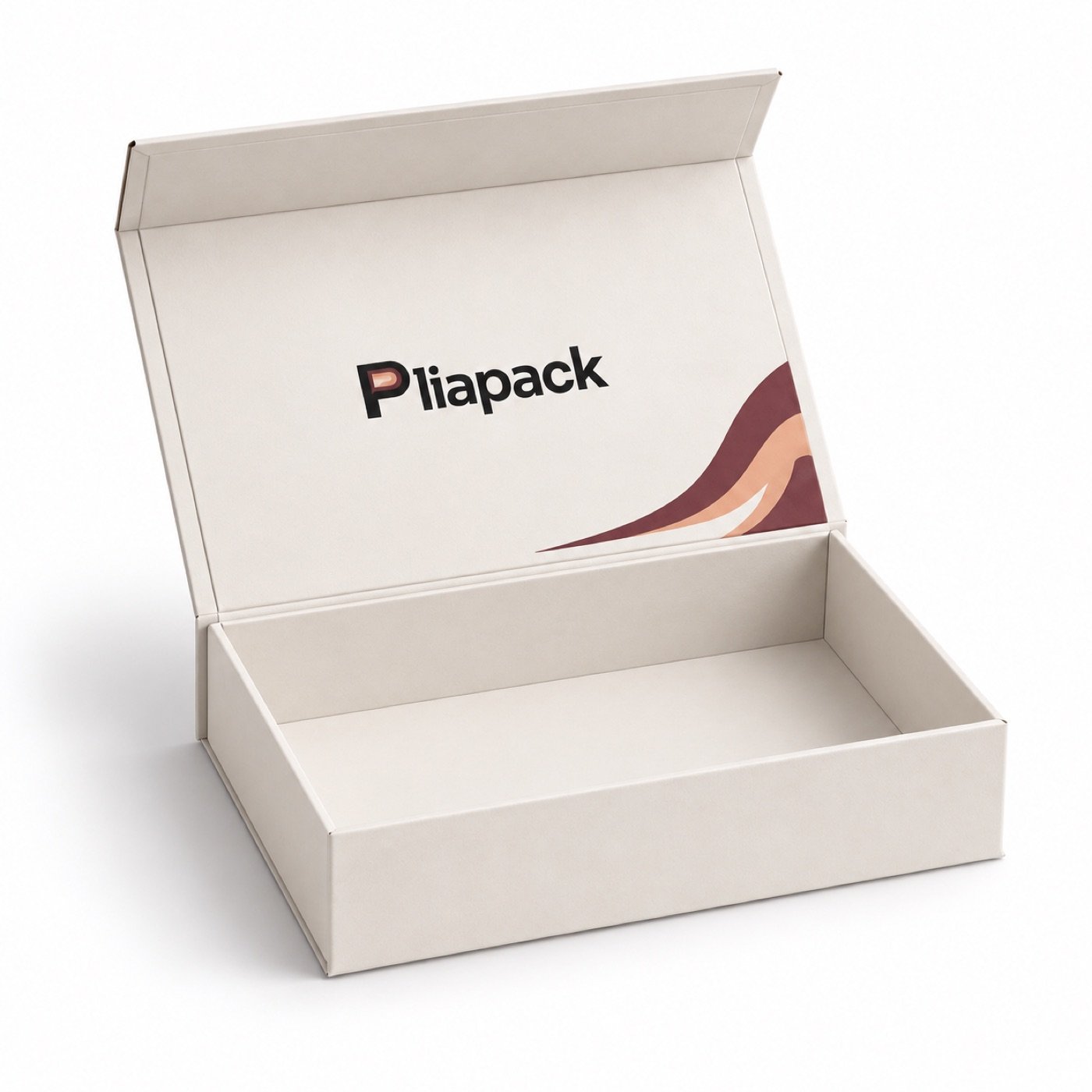
Before approving a presentation-box sample, review it closed, open and through the intended loading and removal sequence. Inspect wrapped edges, inner corners, lining joins and any area normally covered by a removable insert. Agree access before lifting or taking anything apart, and record inaccessible areas as outside the review. A good front-view photograph cannot answer these concealed construction questions.
Image note: the featured image is an AI-generated Pliapack concept of an open magnetic box. It illustrates access to interior surfaces, not a manufactured sample, accepted construction standard or customer project.
Establish what this sample represents
Identify the sample revision, intended materials and included operations before judging the workmanship. A structural model made with substitute paper can help review geometry while leaving final wrapping and decorative appearance open. Ask which surfaces and joins are production-representative and which have been simplified for development.
The sampling and prototyping scope should make those limits explicit. Keep the sample’s identity in every observation so feedback on a development model does not become an unexplained requirement for a later revision.
Follow the sequence from closed box to empty interior
Begin with the pack in its intended closed condition. Look around the perimeter, underside and lid edges, then open it as a recipient would. Note where a paper edge, join or different surface enters view. Continue through product removal and any insert access that the approved design allows. This shows when a hidden detail becomes visible or reachable during normal use.
| Area to view | Question to resolve | Useful record |
|---|---|---|
| Wrapped edges and corners | Is the intended wrap or lining arrangement clear, including the transition between faces? | A wider orientation view and a close view of the specific corner. |
| Inside corners and base joins | Does the visible joint match the agreed reference when the box is empty and open? | The exact inner face, corner or join, linked to the sample ID. |
| Beneath a removable insert | What surface is exposed when the insert is lifted as intended? | The approved access method and the condition actually observed. |
| Hinge or opening fold | Which surfaces and edges become visible during the normal movement? | The open position where the observation occurs, without forcing the structure. |
| Product-facing contact areas | Does the product or removable component meet the intended surface and position? | The actual product reference and the contact location for review. |
These are review locations, not universal pass/fail rules. Different structures use different joins and wrap arrangements. An overlap or seam needs to be assessed against the specified construction and agreed appearance; its presence alone is not a reason to reject a sample.
Distinguish normal access from dismantling
Ask whether an insert is intended to be removable, fixed in place or removed only during an agreed inspection. Do not peel a lining, pull out a fixed platform or prise open a joint and then treat the changed condition as evidence of normal opening behavior. If access would alter the sample, agree the purpose and permission before proceeding.
Where a concealed area matters but cannot be viewed on the complete sample, request an agreed way to review it. That could be an additional detail view or a separately prepared construction reference, with its relationship to the complete sample identified. Record what remains unseen rather than assuming that a visible surface represents it.
For a magnetic hinged-lid box, include the interior exposed by normal opening. For another structure, follow its own opening and assembly sequence. Avoid forcing every box into the same inspection positions.
Describe a location and condition, not a mood
Replace “improve the inside” with a marked observation: sample ID, exact face or corner, the condition seen, the comparison reference and the decision requested. Pair a close photograph with a wider view so the reviewer can locate it. Separate an appearance concern from a movement or contact concern; they may require different revisions.
Illustrative feedback: “Sample S03, inner rear-left corner. The lining edge is visible after the removable insert is lifted. Confirm whether this is the proposed production arrangement and review it against the agreed interior reference. Exterior appearance review remains separate.” This is a feedback example, not a Pliapack sample finding or a specified tolerance.
If the issue concerns color or decorative appearance across adjoining faces, use the physical color and finish review alongside the location record. A detail photograph identifies the concern; it should not silently replace the physical appearance reference.
Close each observation against the next identified revision
Give each open point an owner and a clear status: accepted as shown, revision requested, or not yet demonstrated. Identify which replacement detail or sample will answer the question. If a revision changes the insert, wrap arrangement or opening movement, review the affected interactions as well as the marked location.
Retain the accepted sample identity and the agreed limits with the material and finish specification. This review records the construction and appearance actually observed; it does not establish production consistency or transport performance. Contact Us with your sample scope, marked detail views and remaining questions to plan the next review.