Give every intended lid-and-base combination a pair reference, identify the two components separately, and carry that relationship into receiving and pack-out records. Similar appearance is not a reliable instruction for pairing. When several versions are supplied separately, agree how the packing team will distinguish them before approving the component labels or packing arrangement.
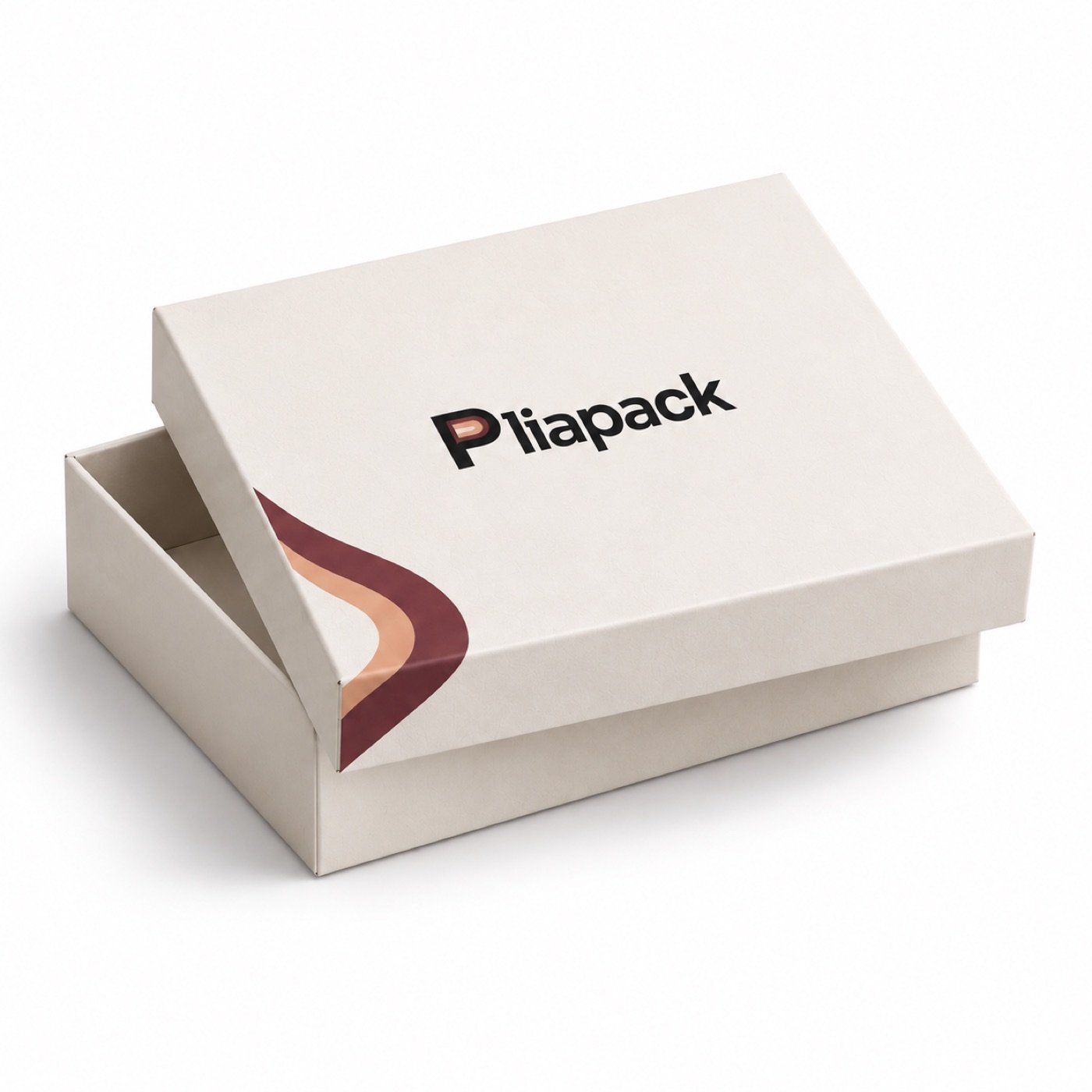
Image note: the featured image is an AI-generated Pliapack concept of a lid-and-base box. It illustrates separate box components, not approved interchangeability, a customer project or a manufactured sample.
Distinguish a pair from a component
A finished box reference describes the combination the recipient receives. A lid reference and a base reference describe the separate parts being handled. Keep both levels in the specification: for example, finished pair A uses lid L-A with base B-A. These are illustrative identifiers, not Pliapack product codes. If two versions deliberately share a component, show that shared reference explicitly instead of issuing two names for the same part.
The comparison of magnetic boxes and lid-and-base boxes helps with the structural choice. Once a removable-lid structure is selected, pairing is a separate handoff decision. Matching exterior dimensions alone does not establish that two components represent the same approved combination.
Write the pairing rule where components are received
Create one short register listing the finished pair, lid reference, base reference, artwork revision and approved sample reference. Add the receiving unit used for each part, such as a labelled bundle or carton, and identify where the component reference can be found. Confirm the actual packing arrangement with the supplier; do not assume that the components will arrive assembled or in equal quantities in each carton.
Keep operational identification separate from visible brand artwork. Agree whether the reference belongs on an outer carton, a removable bundle label or another reviewed location. Do not add an unapproved mark to a customer-facing surface merely to make sorting easier. If identification disappears when a bundle is opened, define how the remaining loose components will stay distinguishable.
Decide whether cross-pairing is intended
A sample approval should state whether only the named combinations are permitted or whether particular lids and bases are intentionally interchangeable. Review the actual combinations that the team proposes to use. A lid that closes on a different base is not, by itself, approval to mix the versions: artwork, orientation, insert clearance or the accepted appearance may differ.
If interchangeability has not been reviewed, retain the named pairing rule. This avoids turning a convenient substitution at the packing table into an undocumented specification change. Use the sampling and prototyping review to record the accepted combinations and any remaining questions, without inferring production consistency from one sample.
Use the pair reference at the packing table
- Set out the approved pair reference and the current component register.
- Keep similar lid and base versions in separately identified locations.
- Check the component identities before adding the contents and closing the box.
- Record mixed or unidentifiable components for review rather than choosing by appearance.
- Keep unused parts and replacements identified when a run changes to another version.
An illustrative mismatch shows why the register matters: a campaign uses the same exterior color for two versions, but one lid has different inside artwork. The components can look interchangeable from the outside. A pair reference links the inside artwork to the intended base and contents; a general instruction to “use the matching color” does not.
Reconcile component counts before calling them finished sets
Count lids, bases and accepted finished pairs separately when reviewing a shortage or replacement request. Ten spare lids do not represent ten complete spare boxes unless the required bases are also allocated. Keep the spare-component allocation connected to the pairing register so replacements preserve the intended version.
Add the accepted pairing rule to the pack-out instructions. Contact Us with the proposed box versions and receiving arrangement to define the references the next sample and handoff should resolve.